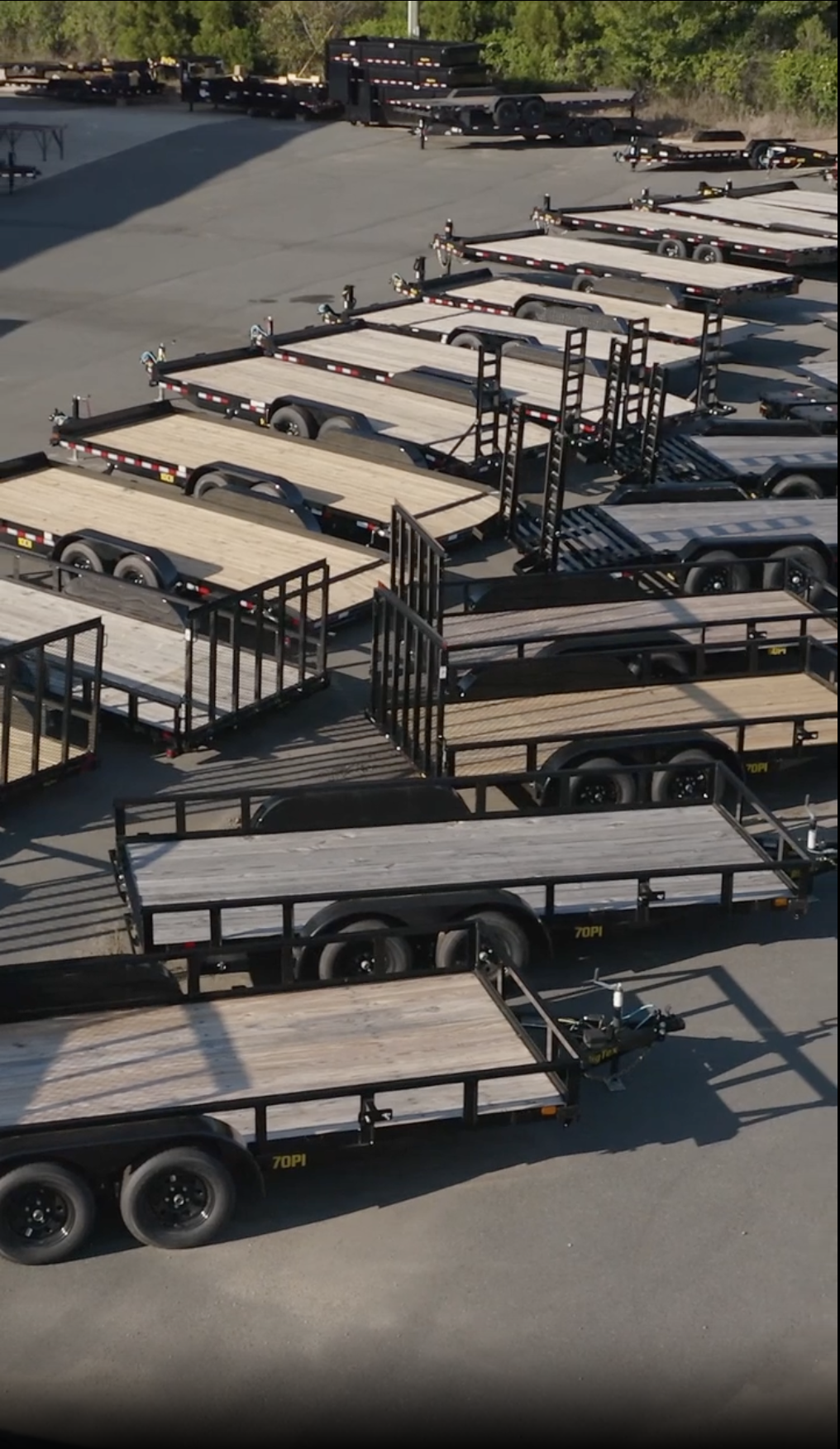
Equipment Trailer Uses & Buying Considerations
Published: March 16th, 2026
When your work depends on moving equipment, attachments, and heavy loads safely, choosing the right equipment trailer is critical. An equipment trailer is designed to transport machinery like skid steers, compact tractors, mini excavators, lifts, and attachments, with the strength, deck space, and load capacity needed for demanding jobs. The right trailer directly impacts safety, efficiency, and how reliably you can move equipment between jobsites.
Big Tex equipment trailers are built for professionals who depend on durability and uptime. With heavy-duty steel construction, reinforced frames, and high GVWR ratings, these trailers are engineered for consistent performance in real jobsite conditions. Features like treated wood or steel decks, secure tie-down points, and reliable braking systems help ensure safe and efficient hauling every time.
Whether you are hauling daily for construction, landscaping, agriculture, or equipment rental, selecting the right trailer helps control operating costs, reduce wear on your truck, and minimize downtime. This buying guide covers common equipment trailer uses, key features, sizes, and weight considerations, along with when specialized options like dump trailers may be the better fit for certain applications.
What Equipment Trailers Are Built To Handle
Equipment trailers are designed to transport heavy machinery safely and reliably. Part of that responsibility is meeting federal requirements for the securement of heavy equipment. Under 49 CFR § 393.130, operators must use proper tie downs and restraint systems to prevent movement of heavy vehicles and machinery during transport, underscoring the importance of professional designs and securement points when choosing a trailer. Landscaping contractors rely on them to move mini excavators and loaders between properties. Agricultural operators haul implements and compact tractors. Construction crews shuttle lifts, rollers, and trenchers from site to site.
Purpose-built equipment trailers differ from general utility models in critical ways, including:
- Reinforced frames for point loads
- Heavier axles and braking systems
- Full-width ramps or dovetail designs
- Deck materials suited for steel tracks and tires
- Tie-down systems placed for real equipment geometry
Those design choices determine how well the trailer holds up after years of loaded miles.
Understanding How Equipment Trailers Fit Among Other Trailer Categories
Professional fleets rarely rely on a single trailer type. Hauling requires shifting between machines, bulk material, and site cleanup. That is why understanding broader types of trailers matters when building a productive lineup.
Equipment trailers focus on machinery transport. Dump trailers handle debris, gravel, and soil. Tilt decks speed loading for wheeled machines. Deckovers offer higher capacities for heavier units. Knowing where each category excels keeps you from forcing one trailer to do work it was not built to handle.
Built For Professionals Who Depend On Daily Output
Big Tex Trailer World’s construction aligns with how professionals actually work. We build trailers for crews who depend on them every day, not for occasional hauling.
That mindset shows up in:
- Heavier steel frames that resist flex
- Crossmember spacing that supports tracked equipment
- Suspension systems tuned for loaded travel
- Wiring and braking components protected from road debris
- Finishes designed to stand up to moisture and jobsite exposure
These details do not chase trends. They extend service life and reduce time spent in the shop.
5 Buying Considerations That Protect Your Investment
Choosing the right equipment trailer is about more than deck length or upfront cost. The right specs directly impact safety, hauling efficiency, maintenance costs, and long-term durability. These are the key factors that separate a reliable work trailer from one that becomes a liability.
1. Gross Vehicle Weight Rating (GVWR) and Axle Capacity
Your equipment trailer’s GVWR determines how much total weight it can safely handle, including the trailer itself. Always select a rating that exceeds your heaviest load—factoring in fuel, attachments, and future equipment upgrades. Running at or near max capacity every day accelerates wear on axles, tires, brakes, and suspension components. Tandem or triple axle configurations with higher weight ratings provide better load distribution, improved stability, and longer service life under commercial use.
2. Deck Configuration and Loading Style
The way you load and unload equipment affects both efficiency and safety. Full-width ramps are ideal for tracked machines like skid steers and excavators. Dovetail designs reduce the loading angle, making them better for low-clearance equipment. Tilt deck trailers eliminate the need for ramps altogether, allowing faster loading for wheeled equipment and reducing setup time between jobs. Choosing the right deck style can significantly improve cycle times and reduce operator strain.
3. Frame Design and Structural Integrity
Frame construction is what determines how well a trailer holds up under repeated heavy use. Look for heavy-duty main rails, closely spaced crossmembers, and reinforced stress points. A stronger frame prevents flexing, keeps the deck level, and maintains proper axle alignment over time. Poor frame design leads to premature fatigue, uneven tire wear, and costly repairs—especially under consistent commercial workloads.
4. Tie Down Placement
Properly located D-rings and stake pockets allow you to secure machines without awkward strap angles. That matters for compliance, safety, and efficiency at every stop.
5. Tow Vehicle Compatibility
Payload capacity, braking systems, hitch ratings, and suspension upgrades all factor into safe hauling. A well matched truck-and-trailer combination protects drivetrains and keeps operators confident on long routes.
When A Construction-Specific Trailer Makes Sense
Some fleets benefit from models optimized for heavier or taller machines. Choosing the right construction equipment trailer can improve stability and reduce loading complications when dealing with excavators, dozers, or large lifts.
These units often feature higher GVWR ratings, deckover layouts, hydraulic dovetails, or reinforced ramps, which are configurations that keep productivity high when moving serious iron.
Why Big Tex Trailer World Stands Apart
Big Tex Trailer World pairs local expertise with Big Tex Trailers’ national manufacturing strength. You get guidance from people who understand working fleets, backed by equipment engineered to stay productive across seasons of heavy use.
Our focus stays where it belongs: durable builds, dependable components, and trailer options that fit professional operations, not bargain bin compromises.
FAQ
What Is The Most Common Use For Equipment Trailers?
Equipment trailers are used to transport heavy machinery and attachments between jobsites. Common loads include skid steers, mini excavators, compact tractors, lifts, rollers, and attachments. They are widely used in construction, landscaping, agriculture, and municipal work to keep crews moving and reduce downtime. Their main value is efficient, repeatable equipment transport across multiple locations.
How Do I Know What Size Equipment Trailer I Need?
Start with the operating weight of your heaviest machine, including fuel and attachments. Choose a trailer with a GVWR that exceeds that weight, along with sufficient deck length and axle capacity. It’s also smart to size slightly above your current needs to allow for future equipment and avoid running at maximum capacity.
Are Tilt Decks Better Than Ramps?
Tilt decks reduce setup time and are ideal for wheeled equipment and fast loading. Ramp trailers offer more versatility, especially for tracked machines and uneven ground. The right choice depends on your equipment type, terrain, and how often you load and unload.
How Long Should A Professional Equipment Trailer Last?
A well-built equipment trailer can last many years with proper maintenance and conservative loading. Frame strength, axle quality, and regular inspections all play a major role in long-term durability and performance.
Can One Trailer Handle Both Equipment And Material?
While some overlap is possible, most operations benefit from separate trailers. Equipment trailers are designed for machines, while dump trailers handle loose materials more efficiently. Using the right trailer for each job improves uptime and extends service life.
Built For The Long Haul
Hauling machinery is not a side task; it is central to your operation. The right equipment trailer keeps crews productive, machines protected, and schedules intact.
If you are evaluating dump trailer options for your fleet, work with Big Tex Trailer World and shop our dump trailers that are designed for serious hauling.


