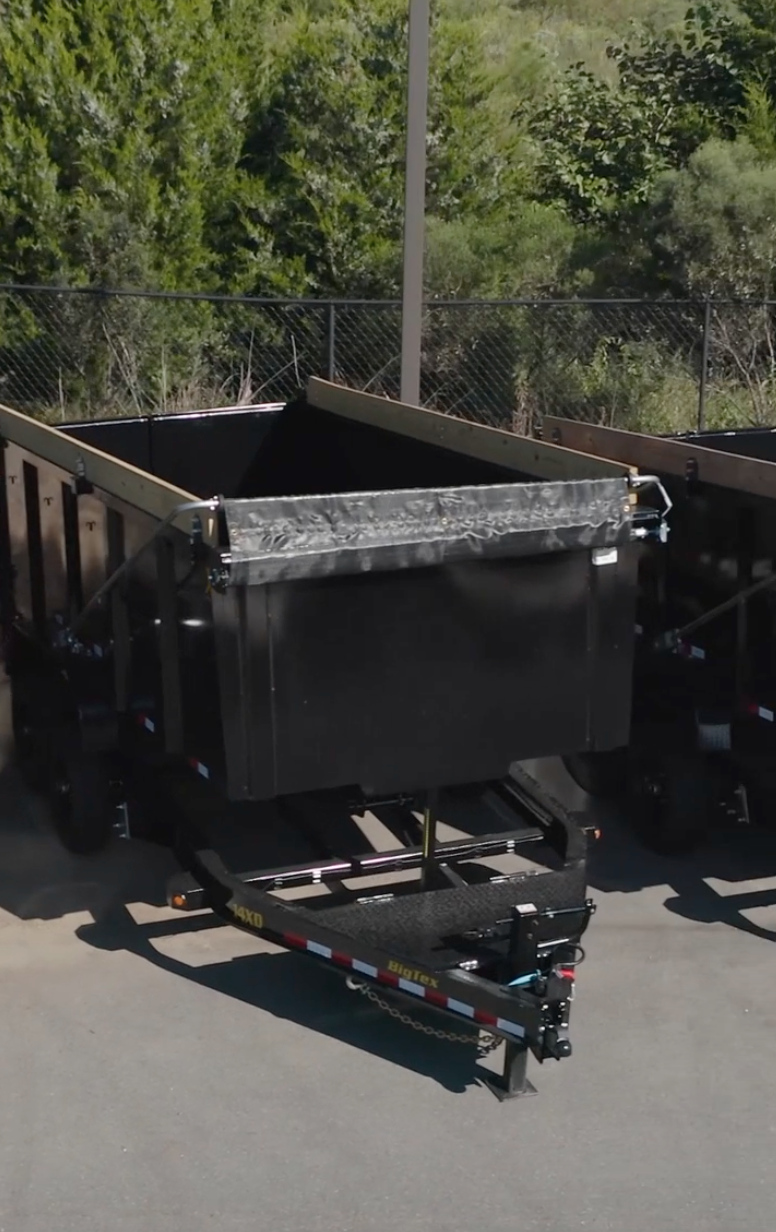
Dump Trailer Uses & Buying Considerations
Published: March 16th, 2026
Dump trailers are purpose-built hauling solutions designed to transport and unload heavy materials quickly and efficiently using a hydraulic lift system. Whether you’re moving gravel, demolition debris, mulch, soil, or equipment, a dump trailer directly impacts how fast you can cycle loads and keep a jobsite running without delays.
Professionals choose dump trailers for their ability to reduce manual labor, speed up unloading, and handle demanding workloads with consistency. They are widely used across construction, landscaping, agriculture, and property maintenance because they improve efficiency, increase hauling capacity, and minimize downtime compared to traditional trailers.
At Big Tex Trailer World, we work with customers who rely on dependable equipment every day. This buying guide breaks down what dump trailers are, why they are essential for serious hauling, and the key considerations that help you choose a trailer built for long-term performance.
Built For Real Workdays
Dump trailers are not specialty tools. They are production equipment.
On active jobsites, they are used to:
- Haul gravel and base material
- Transport demolition debris
- Move brush, mulch, and topsoil
- Shuttle asphalt millings
- Carry scrap and waste
- Support site cleanup and grading
Capacity isn’t the feature that matters. The trailer should hold shape after years of uneven loading, off camber hauling, and daily dump cycles. Big Tex Trailer World builds that reality with reinforced frames, thick gauge beds, and hydraulic systems sized for real payloads, not ideal conditions.
That construction philosophy is why Big Tex Trailer World is the professional standard.
When A Dump Trailer Makes More Sense Than Other Hauling Options
Not every load calls for the same trailer. In some applications, contractors rely on flatbeds or equipment trailers to move machines and attachments. But when material must be discharged repeatedly and efficiently, a dump trailer is the correct tool.
Dump trailers excel when:
- Unloading needs to be fast and controlled
- Material shifts during transport
- Multiple loads run per day
- Crews cannot waste time hand shoveling
- Sites change frequently
Hydraulic dumping replaces manual labor, reduces loader repositioning, and keeps crews cycling instead of waiting.
4 Factors to Consider When Buying a Dump Trailer
Choosing the right dump trailer is about more than headline specs. You want to align construction with how you actually work.
If you are wondering which dump trailer is best for your operation, focus on the fundamentals below.
1. Frame And Bed Construction
A dump trailer lives or dies by its structure. Look for:
- Continuous welded frames
- Closely spaced crossmembers
- Thick steel floors
- Reinforced hoist mounts
These elements prevent sagging and cracking even after thousands of load cycles.
2. Axles, Suspension, And Brakes
Material weight adds up fast. Proper axle ratings, leaf spring packs, and braking systems protect the trailer and tow the vehicle on slopes and rough access roads, especially for operators subject to federal cargo securement standards outlined by the Federal Highway Administration.
Overspecifying here is rarely a mistake. Underspecifying shows up as downtime.
3. Hydraulic System Capacity
Wet soil and debris weigh far more than dry loads. Cylinders and pumps must lift uneven payloads without hesitation. A slow or struggling hoist cuts productivity and shortens component life.
Big Tex Trailer World engineers hydraulic systems that match rated capacities, not marketing numbers.
4. Gate Style And Dump Control
Your discharge method matters:
- Spreader gates for gravel
- Barn doors for bulky debris
- Combo gates for mixed work
Controlled dumping reduces cleanup time and improves placement accuracy.
Matching Trailer Types To Jobsite Needs
Dump trailers are one category inside a broader ecosystem of hauling solutions. Contractors often operate several types of trailers across their fleets, each supporting a different phase of production.
Dump trailers handle material movement, flatbeds move equipment, tilt decks simplify loading, and utility trailers manage tools.
Understanding that division keeps expensive machinery focused on revenue generating work instead of general hauling.
Why Professionals Choose Big Tex Trailer World Trailers
Big Tex Trailer World builds trailers for people who actually put them to work. Commercial operators care about weight ratings they can trust, steel reinforcement in high stress areas, hoist systems that have been proven in the field, coatings that hold up over time, and electrical components that are sealed to handle tough environments.
Our customers keep their trailers in service for years, not just a season or two. That expectation of long term use is part of how Big Tex Trailer World trailers are designed and built from the start.
When your schedule depends on equipment starting every morning and dumping every afternoon, construction quality is not optional.
FAQs
What Size Dump Trailer Should I Buy?
Select capacity based on your heaviest typical material, not average loads. Green lumber, wet soil, and broken concrete weigh far more than mulch. GVWR, axle ratings, and hydraulic capacity should all be sized for worst case conditions.
Are Dump Trailers Better Than Flatbeds For Debris?
Yes, flatbeds carry equipment well, but dump trailers move loose material faster and safer. Hydraulic unloading eliminates hand labor and keeps crews cycling loads.
How Long Do Commercial Dump Trailers Last?
With proper maintenance, trailers built with reinforced frames and quality hydraulic systems remain productive for many years. Structural construction matters more than cosmetic features.
What Gate Style Works Best For Mixed Jobs?
Combo gates offer flexibility, allowing both spread control for aggregate and full opening for bulky debris.
Can One Trailer Handle Multiple Applications?
Yes, if it is properly rated. Contractors often use the same dump trailer for soil, demolition debris, and cleanup, provided the structure and hydraulics are built for repeated heavy cycles.
What are the different types of dump trailers?
Dump trailers come in several configurations designed for different hauling needs. The most common types include standard dump trailers for general use, low-profile trailers for easier loading and better stability, gooseneck dump trailers for higher capacity towing, roll-off dump trailers with interchangeable bins for commercial jobs, and side dump trailers that unload material from the side. Each type is suited for different applications, from residential projects to heavy-duty construction work.
What are the safety considerations when using a dump trailer?
Using a dump trailer safely requires proper loading and operation. Always stay within the trailer’s weight capacity and distribute weight evenly to prevent sway or tipping. Secure all materials before transport to avoid shifting loads. When dumping, ensure the trailer is on level ground to reduce the risk of rollover. Regularly inspect the hydraulic system, brakes, lights, and connections to ensure everything is functioning correctly. Proper maintenance and safe operation are essential for both performance and safety.
What are the key features of a dump trailer?
Dump trailers are designed with features that make hauling and unloading efficient. Most include a hydraulic lift system to raise the bed, a durable steel or aluminum body for heavy materials, and rear gate options such as barn doors or spreader gates. Many also come with tarp systems to secure loads, tandem axles for stability, and an onboard battery to power the hydraulic system. These features allow dump trailers to handle demanding jobs with ease.
What are the dimensions of a standard dump trailer?
Standard dump trailer dimensions vary depending on the model, but most range from 8 to 16 feet in length and about 6 to 7 feet in width. Side wall heights are typically between 2 and 4 feet. Larger models are available for commercial use.
Choose Equipment That Protects Your Productivity
Dump trailers are not accessories. They are revenue tools.
When equipment is used every day, the details matter. Reliable construction helps limit downtime, reduces unnecessary strain on tow vehicles, and keeps crews working without interruption. Big Tex Trailer World focuses on practical build choices and proven engineering because that’s what holds up over time in real working conditions.


